
Business leaders have had an important realization that the wall between “tech” and “non-tech” roles must come down. While AI and digital innovation promise unprecedented growth, these benefits remain out of reach for organizations whose workforces lack the fluency to use them.
The stakes are measurable.
Research from McKinsey indicates that digital leaders outperform slugs by two to six times in total shareholder returns. To close this gap, companies need more than just a few elite developers. What they need is a high level of digital literacy across the entire organization.
Every Leader is Now a Tech Leader
Modern excellence requires every employee, and especially every executive, to be tech-savvy. Today’s business leaders are directly responsible for tech-enabled products. To lead effectively, they must now understand the following
- Cloud Economics– Knowing how migration status affects product costs.
- Enterprise Architecture– Dealing with the trade-offs between custom builds and off-the-shelf software.
- Data Governance– Understanding how to use machine learning while managing cybersecurity risks.
The Best Approach to Upskilling
The most successful companies have opted for the following to gain a competitive edge.
- Targeting Important Gaps– Focusing on specific skills that drive long-term strategy.
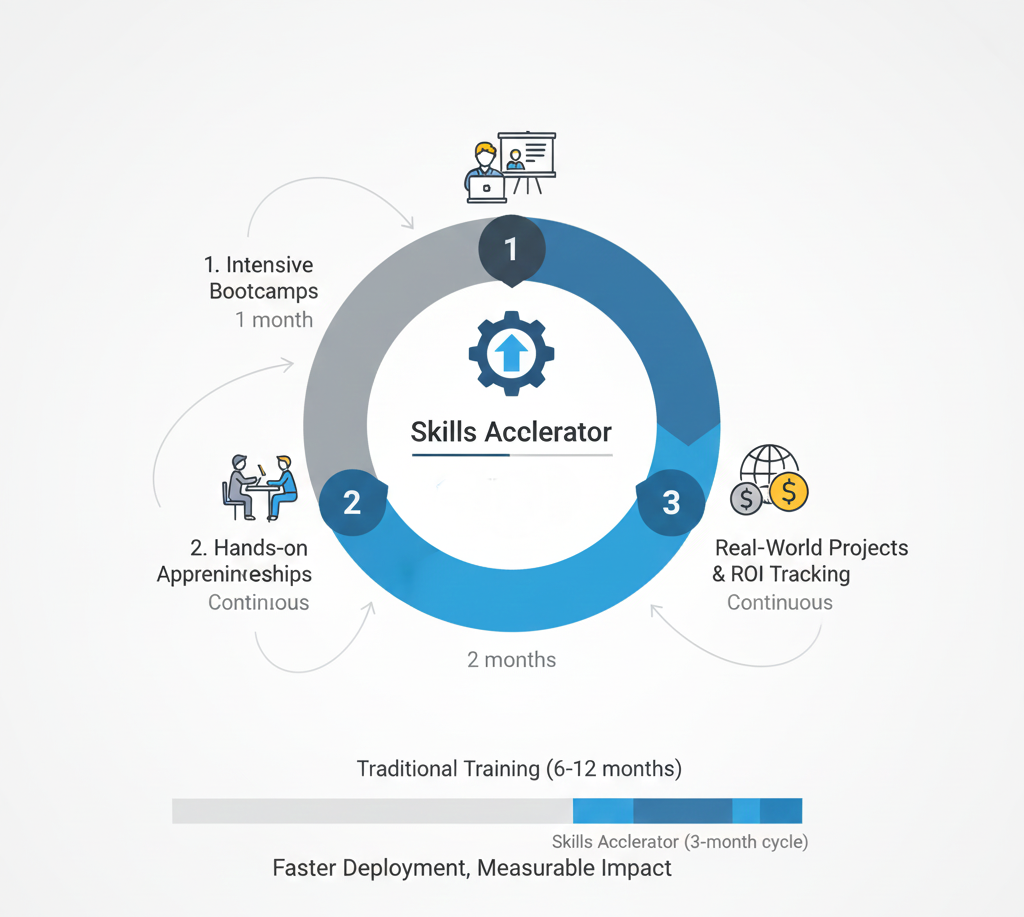
- Modernizing Delivery– Utilizing hybrid, real-world learning models that move beyond the classroom.
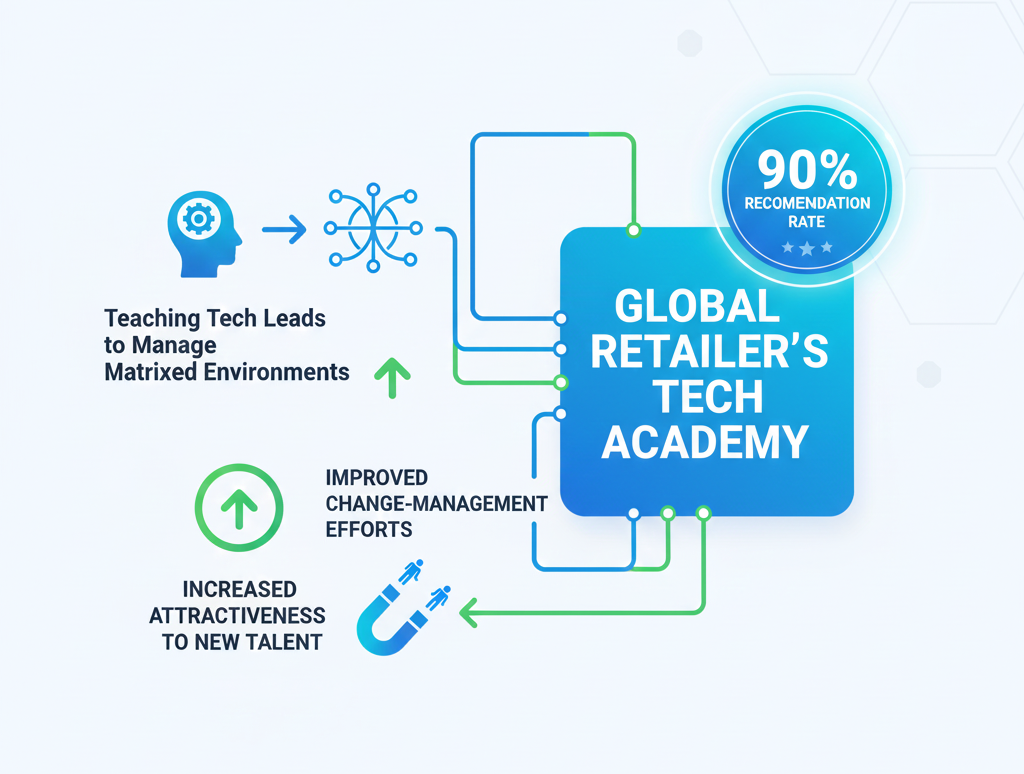
- Cultivating Learning Cultures– Using continuous development to attract and retain top-tier talent.
- Ensuring Accountability– Tying learning initiatives directly to business outcomes and leadership incentives.
To avoid falling behind, organizations must stop viewing technology as a department and start treating it as a core competency for every member of the team.
The Necessity for Upskilling
While skill-building has always been important, the combination of tight labor markets and rapid technological shifts has made it a business necessity.
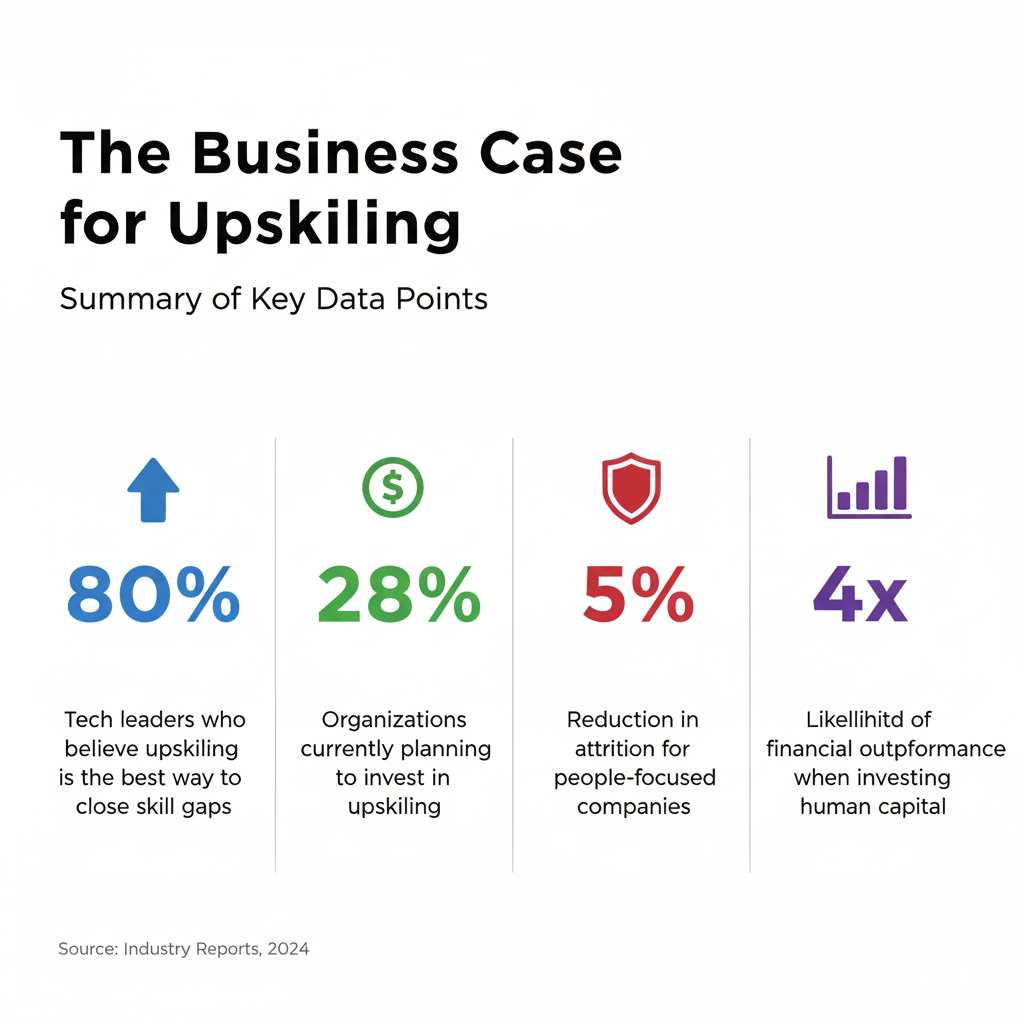
According to a McKinsey survey of over 80 US tech leaders, 80% view upskilling as the most effective solution to the skills gap. Despite this, only 28% of organizations plan to invest in these programs over the next few years.
Organizations that delay upskilling risk falling behind. Investing in people development offers a dual advantage.
- For Employees- It removes the primary barrier to career mobility and job satisfaction.
- For the Organization- Companies that prioritize human capital see 5% lower attrition rates, greater resilience, and more consistent profits. In fact, those that balance financial goals with people development are four times more likely to outperform their competitors.
Bridging the AI Talent Gap
As companies shift toward “agentic” models, a massive gap has emerged between AI investment and organizational readiness. While 92% of companies plan to increase AI spending, only 1% describe their current deployment as mature.
The Current Scene
The challenge isn’t just finding technical talent but finding talent that understands your specific business.

5 Steps to Build a Future-Ready Workforce
To move from “pilot” to “mature” AI adoption, leaders should implement these five strategic pillars
1. Prioritize High-Impact Skills
Focus on skills that offer a competitive advantage. Upskilling shouldn’t be a blanket approach, but it must align with long-term business strategy and be championed by senior leadership.
2. Pilot and Scale a Holistic Strategy
Don’t launch everything at once. Test learning initiatives with small, agile groups, gather data on what works, and then scale those successes across the organization.
3. Iterative Curriculum Design
Use Gen AI and academic partnerships to build learning paths quickly. Move away from theory and toward practical application with real-time feedback loops.
4. Empower Learner Ownership
Shift the culture so that learning is “always-on.” Employees should feel empowered to integrate skill-building into their daily workflows rather than waiting for a formal classroom invitation.
5. Link Learning to Career Growth
Connect upskilling directly to incentives, performance reviews, and promotions. When managers act as teachers and provide the “space” to learn, skill retention skyrockets.
Work is Learning
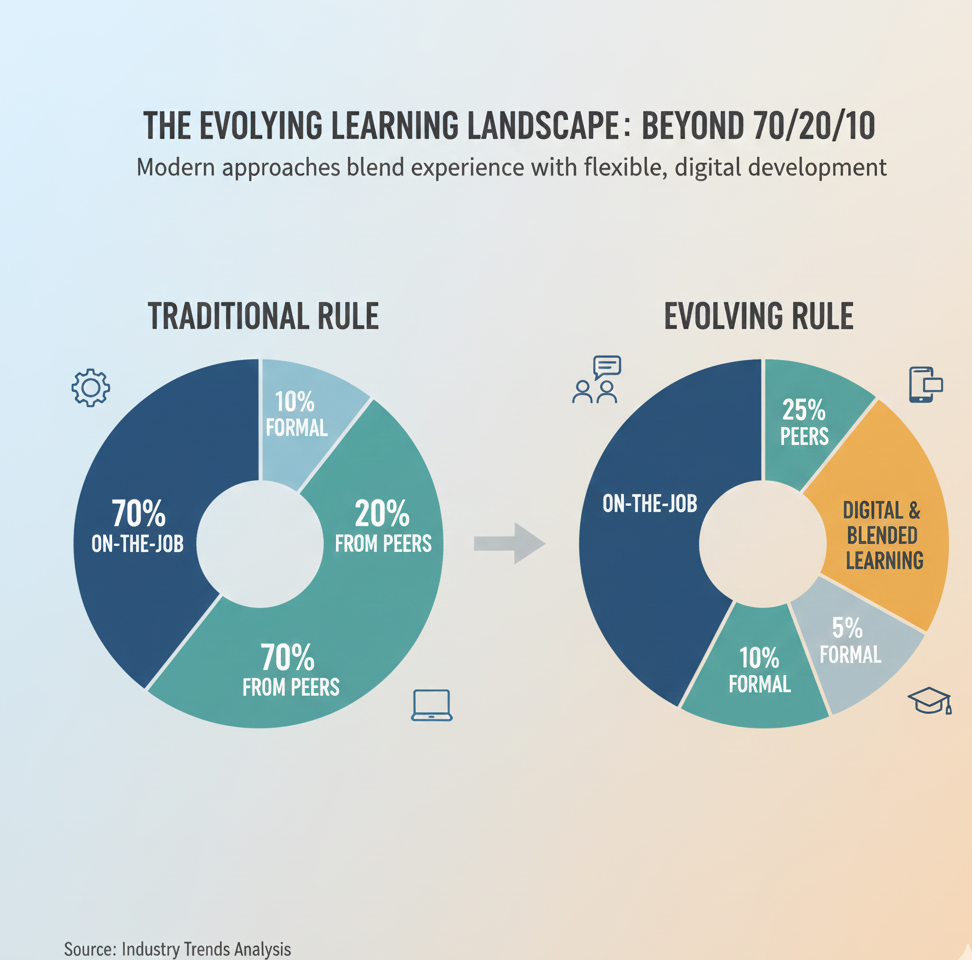
In the AI era, the line between “working” and “training” is disappearing.
The future of learning is the reimagining of work itself to be inherently developmental, personalized, and continuous.
Closing the Tech Talent Gap
As the pace of innovation accelerates, organizations must move beyond generic training to bridge three critical skill domains- Technical Foundations, Deep Technical Expertise, and Business Fundamentals.
- Technical Foundations
To promote a “learning mindset,” all employees, regardless of role, need a shared vocabulary and understanding of the company’s digital ecosystem. Generative AI, agile methodologies, data fluency, and the internal tech stack are the core focus. Hybrid models are delivered using external on-demand courses augmented by internal subject matter experts (SMEs).
- Deep Technical Expertise
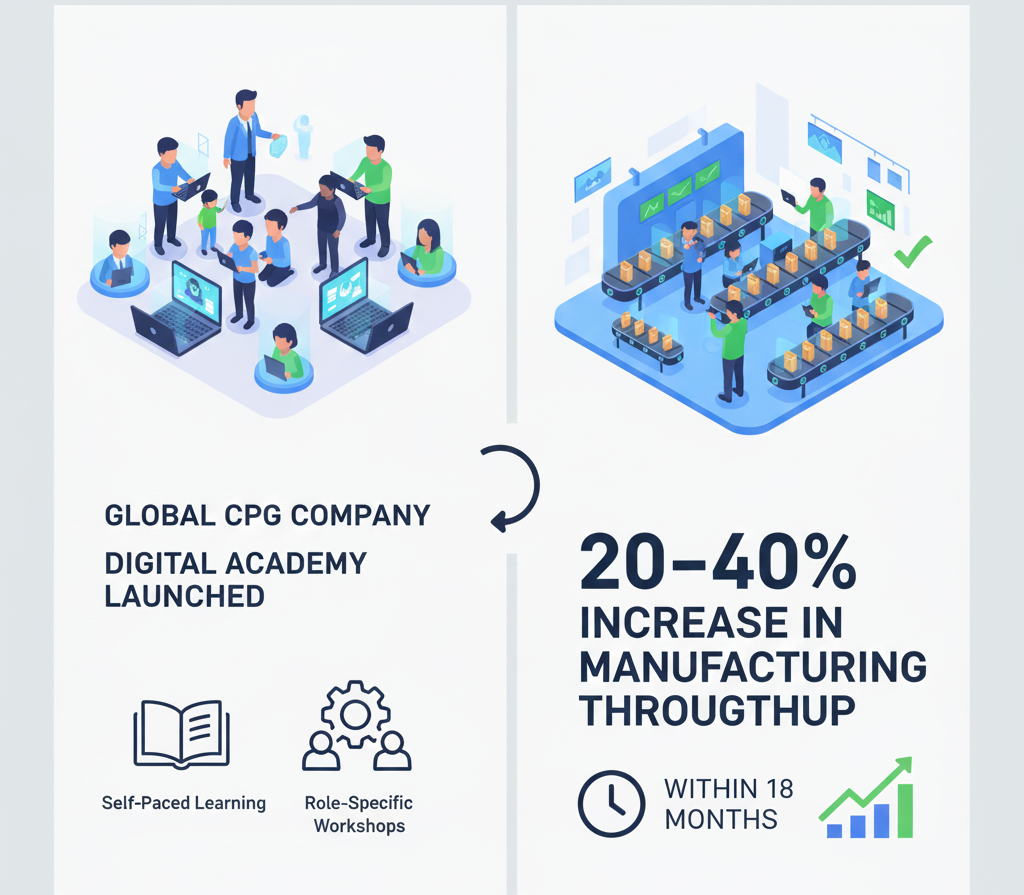
For technical staff, the focus shifts to advanced capabilities that drive competitive advantage. Cloud architecture, AI/ML, cybersecurity, and product management were mostly focused upon. Modernizing firms prioritize Cloud and DevSecOps, growth-stage firms focus on Product Management, and tech-first firms invest in CX-enhancing technologies.
- Business Fundamentals
Tech talent often lacks the organizational context needed to drive change. Upskilling in this area ensures tech initiatives align with commercial goals. Complex problem-solving, storytelling, stakeholder management, and conflict resolution are focused upon. Cross-functional training is delivered that uses tangible company examples to make “soft skills” feel relevant to developers and engineers.
Future-Proofing Your Upskilling Strategy
To accelerate impact, leaders should adopt these five forward-looking practices.

By 2027, nearly 25% of jobs will transform. Upskilling is thus a necessity to ensure that tech talent understands the business, and business leaders understand the tech.
The integration of digital technology in the workplace is an accelerating trend that requires a dual-track approach to talent development. Organizations should prioritize bridging the digital divide for non-technical staff while simultaneously equipping tech teams with business fundamentals to drive overall productivity.
A successful upskilling strategy relies on identifying important gaps and aligning corporate governance with agile learning programs, ensuring the entire workforce is prepared for a digital-first future.
References
https://www.cognizant.com/us/en/insights/insights-blog/how-to-close-the-digital-skills-gap