
PCPL Helps You Shift From IT Projects to AI Capabilities
Enterprise technology investments have followed a familiar pattern for quite a long time.
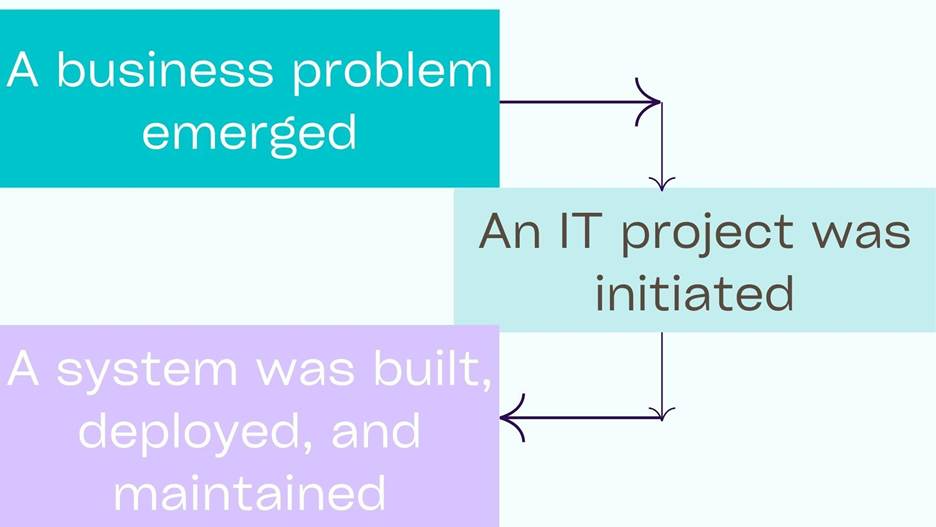
Success was measured in on-time delivery, budget adherence, and system uptime. But that model is quietly becoming obsolete.
Today, organizations are investing in intelligence. And this shift from IT projects to AI capabilities is fundamentally redefining how enterprises think about value, ROI, and competitive advantage.
Global AI spending is projected to reach $2.5 trillion by the end of 2026, growing 44% year-over-year. In 2025, enterprises spent $37 billion on generative AI alone, a 3.2x increase from 2024. AI investments hit $225+ billion globally in 2025, with nearly half of all funding flowing into AI companies. Nearly 47% of Indian enterprises now have AI use cases in production, not just pilots.
Worker access to AI tools grew by 50% in 2025, and enterprise-scale deployments are rapidly increasing. 74% of enterprises expect AI to drive revenue, but only 20% are currently achieving it. That gap between expectation and realization is where the real transformation lies.
Traditional IT Investment Models Are Breaking Down
Traditional IT investments were project-based, static, and cost-centered. AI doesn’t fit this model.
AI is continuous, data-dependent, and outcome-driven. This is why many organizations struggle. They’re trying to manage AI like software, when in reality, AI behaves more like a capability or muscle.
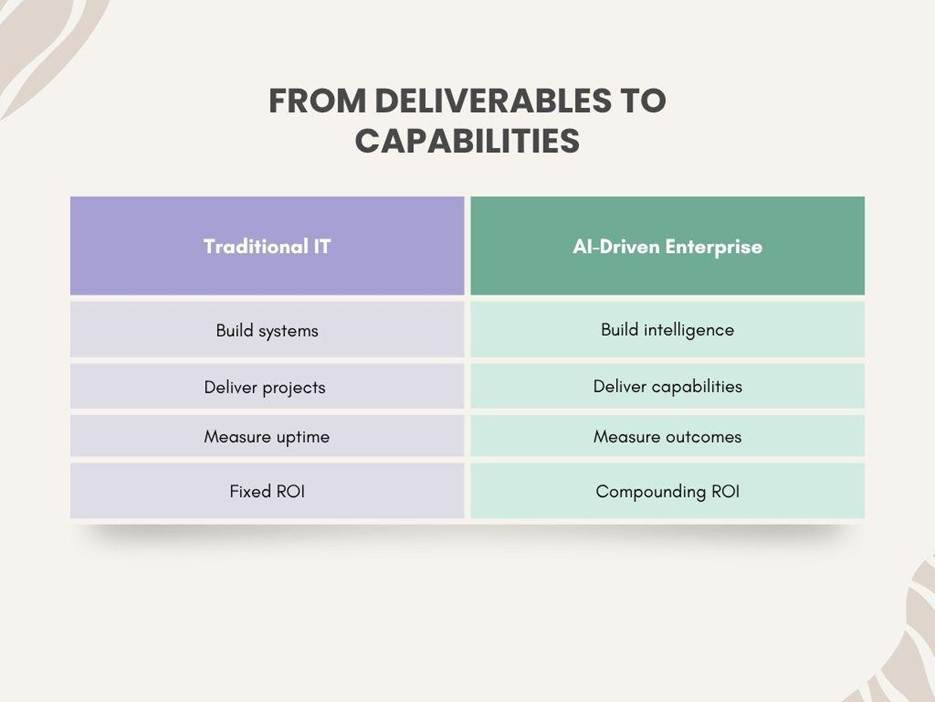
A CRM system is a project. But predictive customer intelligence? That’s a capability. A dashboard is a project. But real-time decision-making automation? That’s a capability.
The Rise of AI as a Core Budget Line
One of the most striking shifts in 2025–2026 is this. AI is becoming the primary line item in enterprise budgets. Enterprise software spending grew nearly 58% YoY, largely driven by AI adoption. Big Tech companies like Amazon, Microsoft, Meta, and Alphabet are expected to invest $650 billion in AI infrastructure in 2026. This is reallocation at scale.
Organizations are actively shifting budgets away from traditional SaaS tools and toward AI-native capabilities.
Things Leading Enterprises Are Doing Differently
The shift is most visible in how leading companies are embedding AI into their operating models, not as projects, but as core capabilities.
Shopify is Using AI as a Hiring GatekeeperShopify has taken a bold stance. Before hiring new employees, teams must now prove that AI cannot do the job first. AI usage is also embedded into performance reviews. The result is flat headcount, ~30% annual revenue growth, and faster innovation cycles. This is an organizational redesign around AI capability.
ServiceNow uses AI as a Profit EngineServiceNow reported $355 million in savings from AI adoption, reinvesting much of it into further innovation. Their approach was to automate internal workflows, enhance service delivery, and use AI to reduce operational friction. AI is not reducing cost alone here but fueling growth as well.
Accenture has AI-Led Growth StrategyAccenture’s 2026 results highlight the shift clearly. $22.1 billion in new bookings driven by AI demand. Strong revenue growth linked to AI and cloud adoption. AI has become the core driver of business expansion.
Financial Services in India are Doubling DownIndia’s financial sector is expected to double AI spending in 2026, focusing on customer experience, fraud detection, and operational efficiency. This reflects a shift that AI is becoming essential to stay competitive, not just innovate.
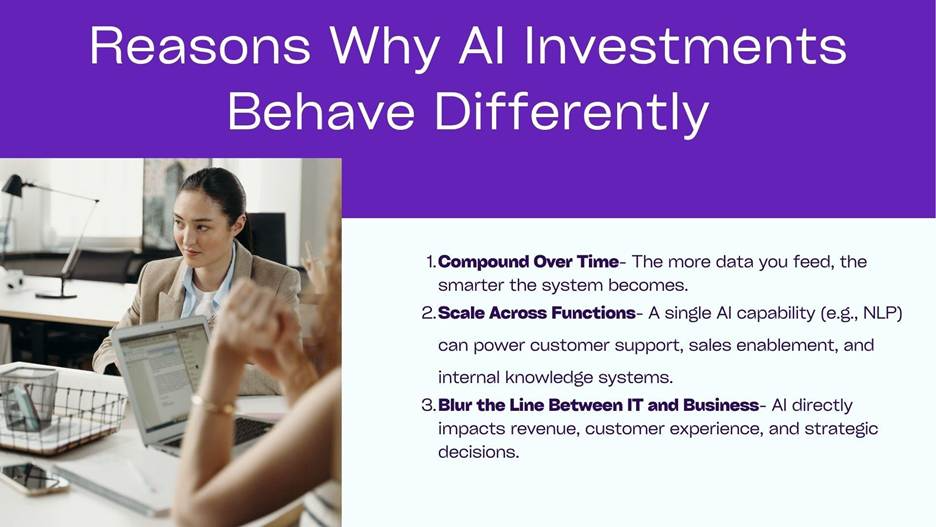
CIOs are this becoming strategy architects, and not just technology leaders
The Real Challenge
Despite massive investments, many organizations are not seeing expected returns. Because the problem is how we invest in it.
Common problems are overinvesting in models, underinvesting in data, ignoring change management, treating AI as isolated pilots, and lack of integration with business workflows.
This explains why only 20% of enterprises are realizing AI-driven revenue impact, despite high expectations.
Rethinking Enterprise Investment Strategy
To move from IT projects to AI capabilities, organizations need to rethink three core areas
Budgeting for CapabilitiesInstead of asking what system should be built, business leaders need to think of the capability they need to develop.
Investing in Data as InfrastructureAI is only useful if the data is good. Yet many enterprises underinvest in data quality, lack unified data architecture and struggle with governance. AI success depends less on algorithms and more on data readiness.
Designing for Continuous EvolutionAI is never done. It requires ongoing training, feedback loops, and monitoring and governance. Think of AI as a living system.
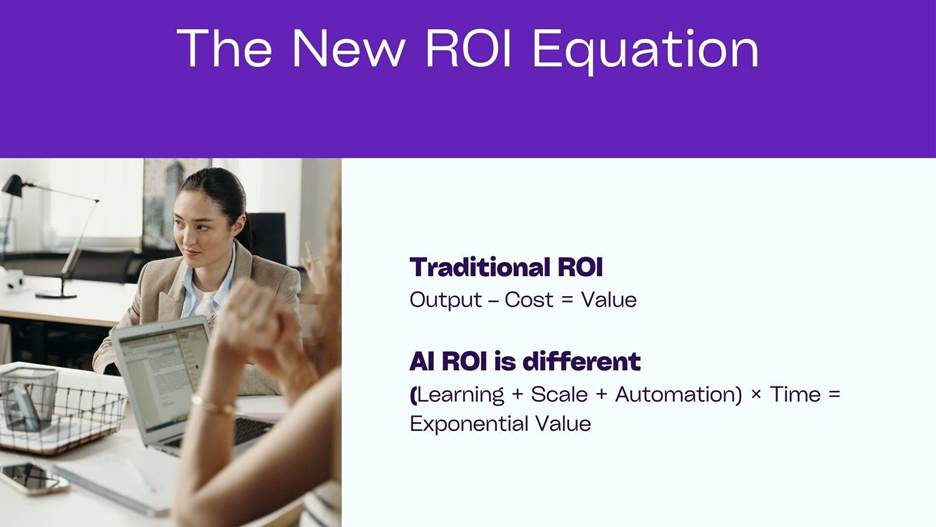
This is why CFOs are now seeing millions in savings and productivity gains, with AI becoming a strategic lever.
What the Future Enterprise Looks Like
We are moving toward a new kind of organization- the Intelligence-Driven Enterprise, where decisions are augmented or automated by AI, processes are continuously optimized, data flows seamlessly across systems, means employees work alongside AI, not around it
In fact AI adoption is already reaching 80% of enterprises globally, productivity, cost efficiency, and customer experience are the top drivers of investment.
Conclusion
We are at a turning point similar to the early days of the internet or cloud computing. Back then, companies that merely adopted technology survived. But those who reimagined their business around it became market leaders.
AI is no different. The winners of this decade will not be the ones who implement the most AI tools. They will be the ones who build intelligence into the DNA of their organization.
#AIConsulting #DigitalTransformation #ITtoAI #AIIntegration #TechConsulting #ArtificialIntelligence #PCPL
References
https://www.databricks.com/blog/ai-projects-operational-capability