
The traditional line between insourcing and outsourcing has now grown into a bridge. We are witnessing a rapid shift toward a hybrid model where internal expertise and external partnerships blend into a single, fluid operation. Driven by the “AI-first” era and a volatile global labor market, the question has shifted from a binary “should we?” to a strategic “how much and where?”
The AI Catalyst
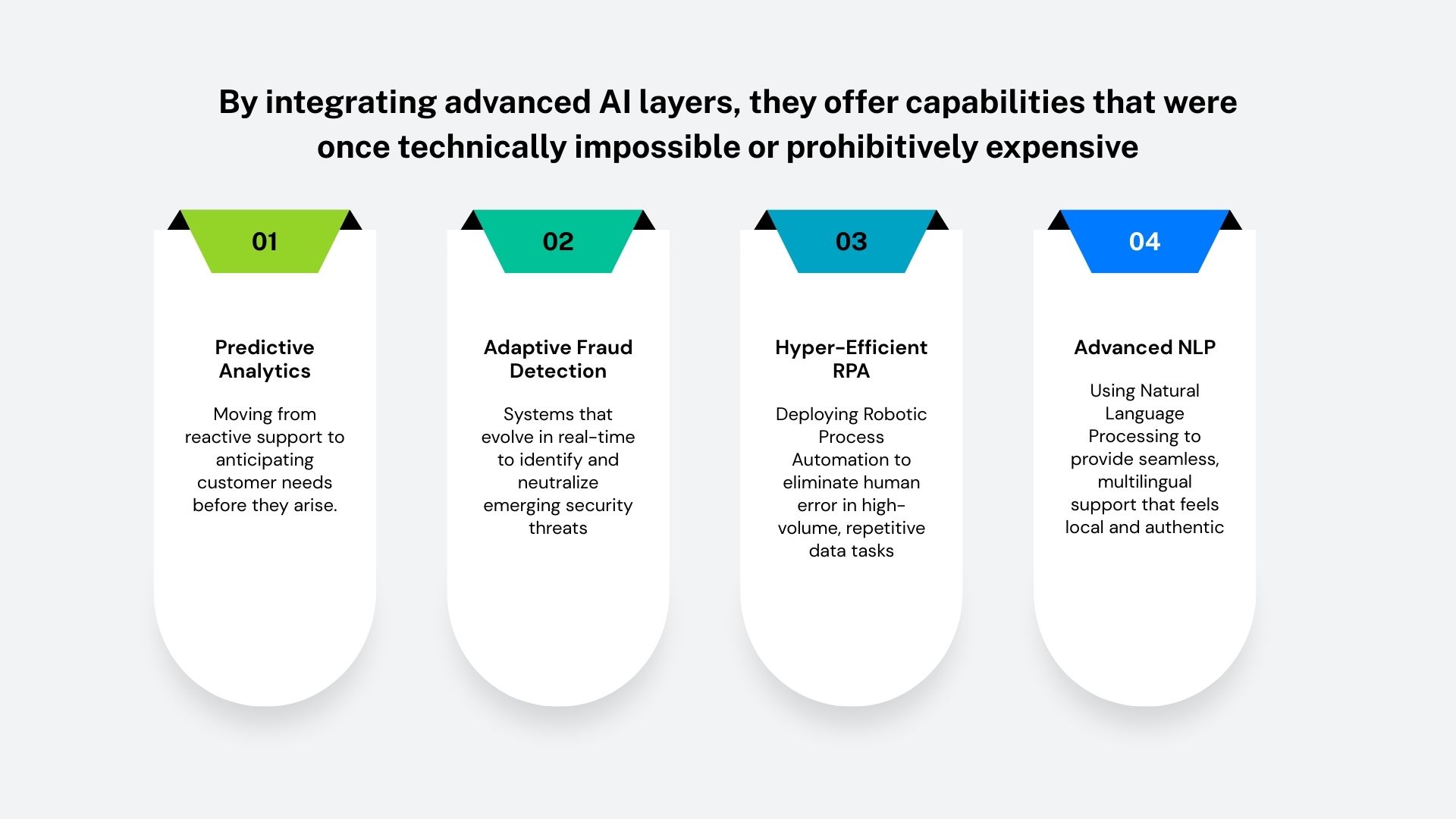
Artificial intelligence has moved from the back office to the front lines. Outsourcing partners are no longer just providing labor but also providing high-speed AI infrastructure for complex tasks like fraud detection, predictive supply chain management, and real-time data analysis. These are capabilities that few companies can build or scale as efficiently on their own.
However, as tech scales, the “human element” becomes even more valuable. Organizations are doubling down on insourcing roles that require deep cultural alignment, sensitive decision-making, and high-stakes strategic oversight.
The In-House vs. Outsource Debate is Obsolete Now
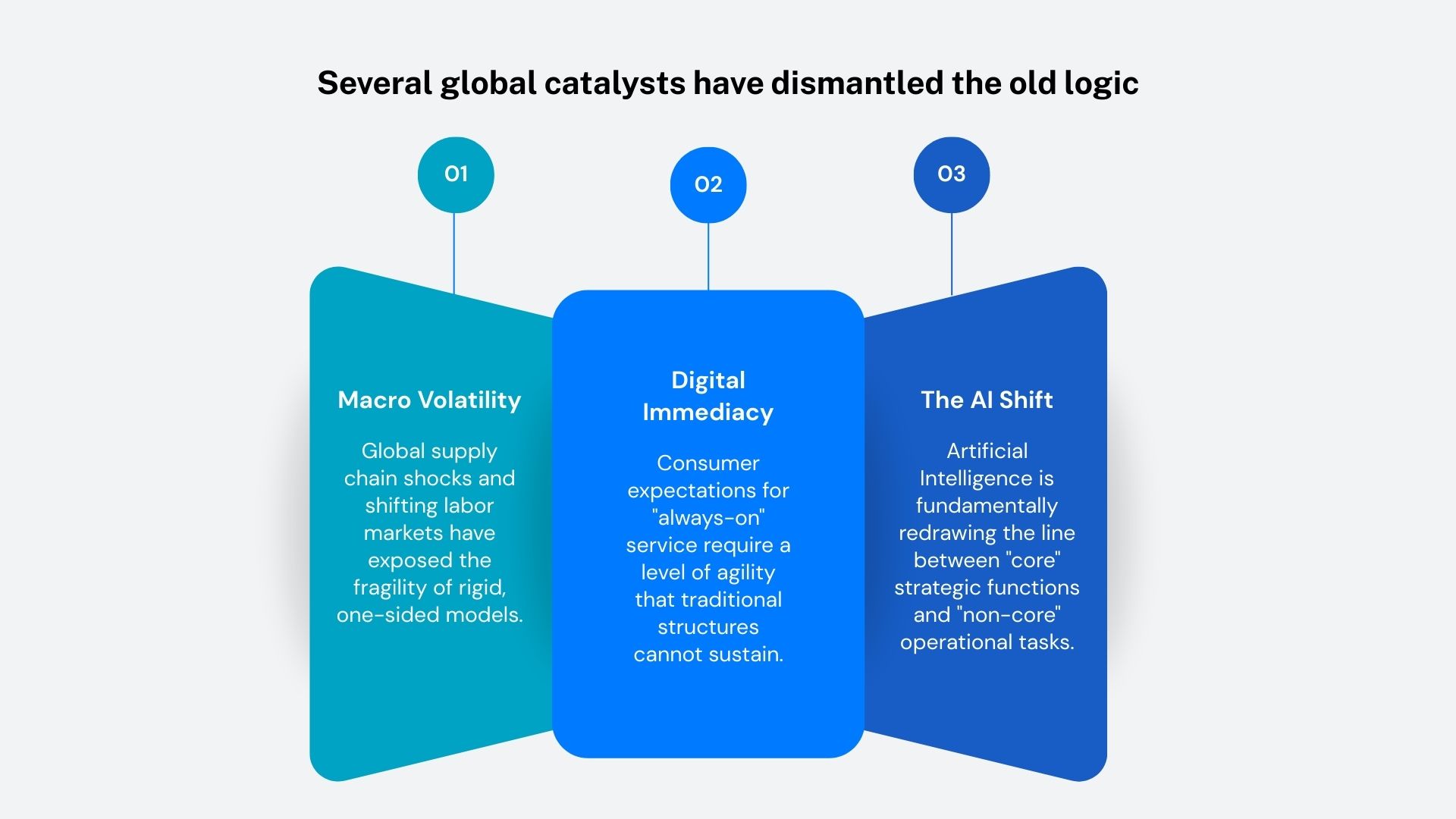
The historical tug-of-war between insourcing and outsourcing has reached a tipping point. For decades, organizations treated this as a zero-sum game, choosing a path based solely on immediate cost savings or a desire for total control. However, in an era defined by persistent volatility and rapid digital evolution, this binary framework is no longer viable.
The Forces Reshaping the Model
The New Definition of Insourcing
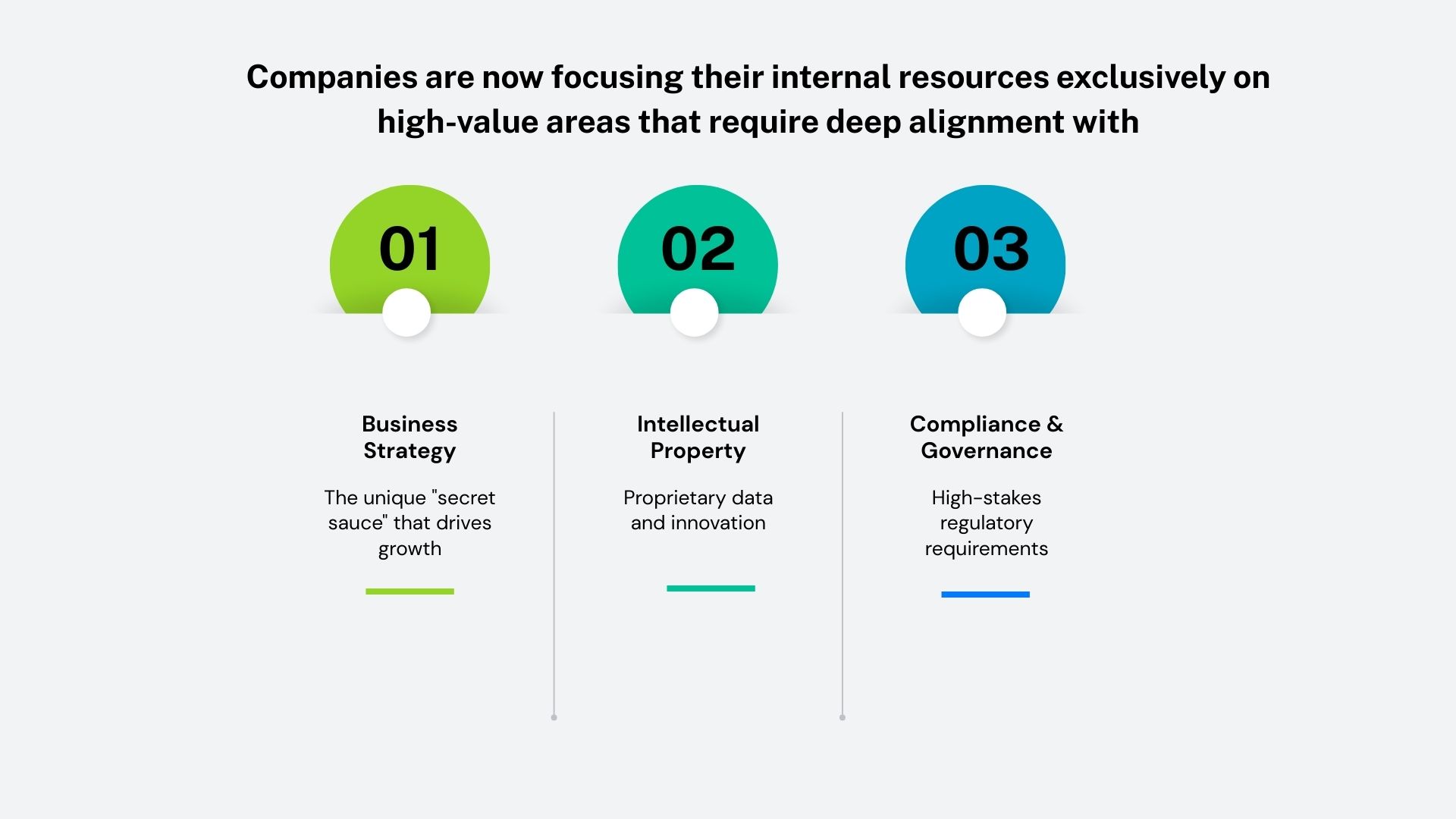
Modern insourcing is no longer about total ownership of every process. Instead, it has become a precision tool.
The Rise of the AI-Enabled Hybrid
Everything outside of those strategic pillars is becoming a candidate for AI-enabled outsourcing. This model allows organizations to scale instantaneously and integrate cutting-edge tech without the burden of rebuilding legacy infrastructure.
The shift is already reflected in the C-suite. According to a recent Deloitte study, 83% of leaders are now integrating AI into their outsourced operations. Further, 20% of executives are actively developing “digital workforce” strategies, creating a fluid ecosystem where automated functions and human talent work in seamless synchronization.
Redefining the Value of Outsourcing
Artificial Intelligence is fundamentally rewriting the outsourcing playbook. No longer just a strategy for reducing labor costs, AI is transforming Business Process Outsourcing (BPO) into a high-octane partnership model focused on intelligence and scalability.
Moving Beyond Labor Arbitrage
Modern BPOs are shifting from “providing heads” to “providing outcomes.”
The Strategic Edge of Global Hubs
AI-driven outsourcing provides 24/7 operational continuity with a level of precision that transcends time zones. This evolution is particularly visible in mature markets like the Philippines. By combining the country’s renowned English proficiency and adaptable workforce with cutting-edge AI tools, businesses gain a “human-in-the-loop” model that ensures technology remains empathetic and customer-centric.
Scalability Is The In-House Hurdle
For many companies, building an internal AI infrastructure is a slow, expensive uphill battle.
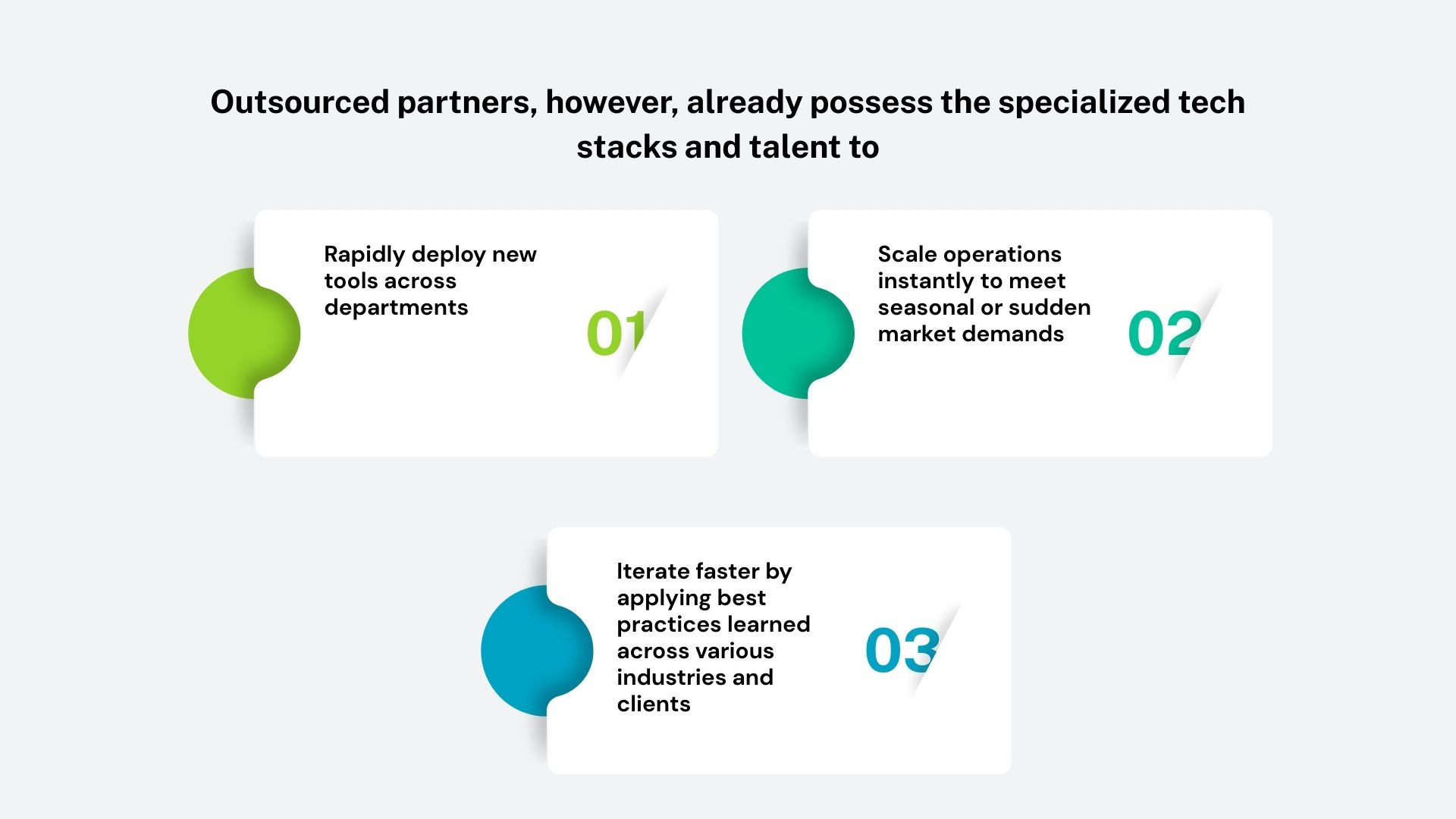
In the end, the joint efforts between human expertise and machine intelligence allows businesses to focus on their core mission while their outsourced functions drive innovation and growth.
Strategic Insourcing For Preserving the Core in an AI-Driven World
While AI outsourcing offers undeniable efficiency, strategic insourcing remains a critical defensive and offensive maneuver. When a project touches the “soul” of a company, its data privacy, unique brand identity, or competitive edge, keeping operations internal is often the only way to ensure long-term viability.
Defining Modern Insourcing
Insourcing today is the essential choice to retain high-stakes strategic functions to maintain total control and alignment with the organization’s North Star.
Core Functions for In-House Mastery
Certain pillars of a business are too sensitive or specialized to be managed by a third party. Common examples include the following
- Research & Development (R&D)- Protecting the intellectual property and “secret sauce” that defines market leadership.
- Compliance & Legal Oversight- Managing high-level risks where the cost of an external error is catastrophic.
- Executive Decision-Making- Steering the company’s vision based on nuanced internal context that algorithms cannot capture.
- High-Touch Relationship Management- Handling VIP clients or complex partnerships that require a “human-first” brand touch.
The Internal Advantage
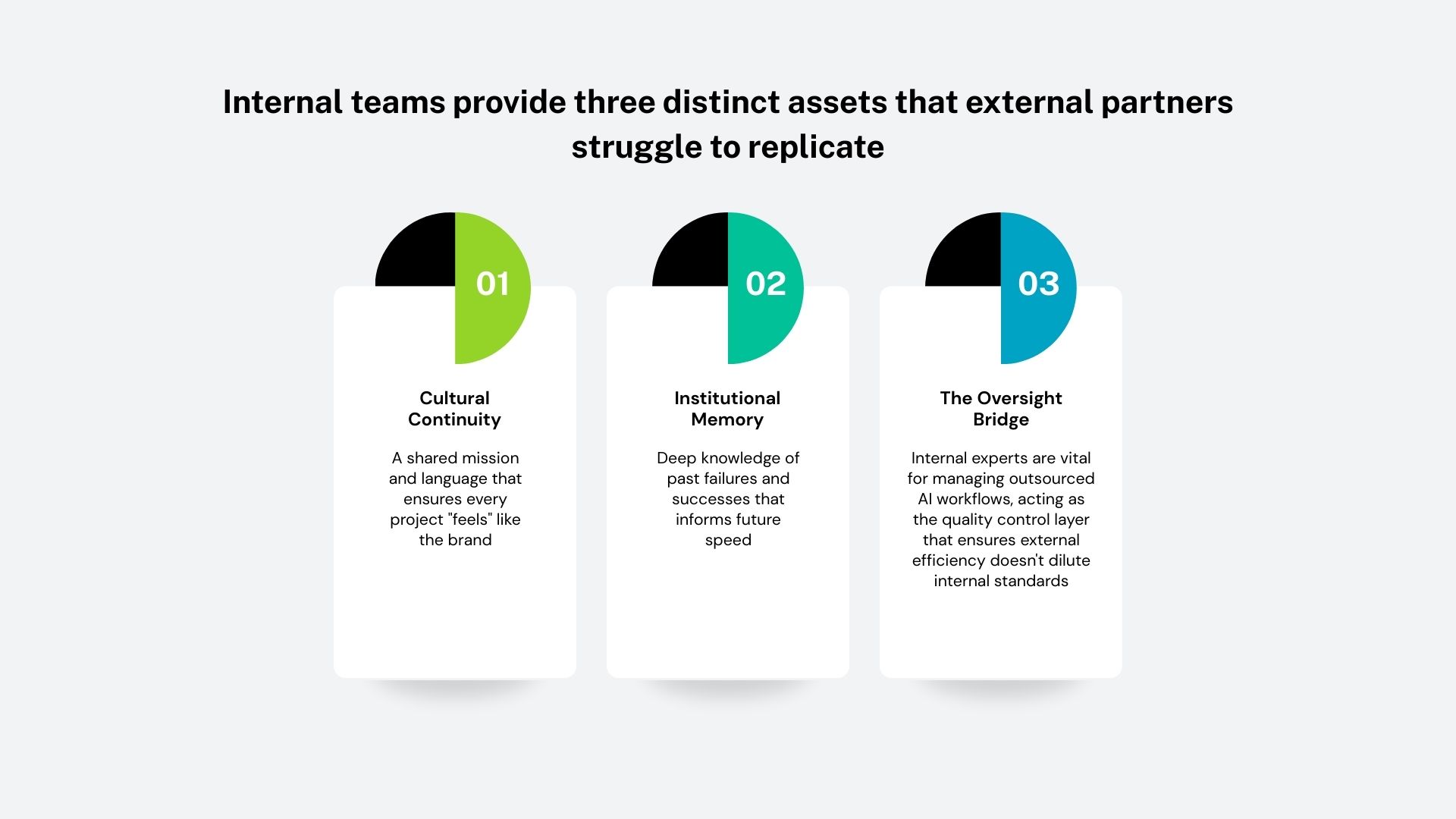
Best of Both Worlds
Merging AI outsourcing with selective insourcing creates a powerful combination that unlocks a new level of strategic agility. Rather than being restricted to a single operational model, companies gain the flexibility to allocate resources where they generate the most impact.
Advantages of a Hybrid Approach
In an increasingly global market, combining internal expertise with external AI-driven efficiency offers several benefits like
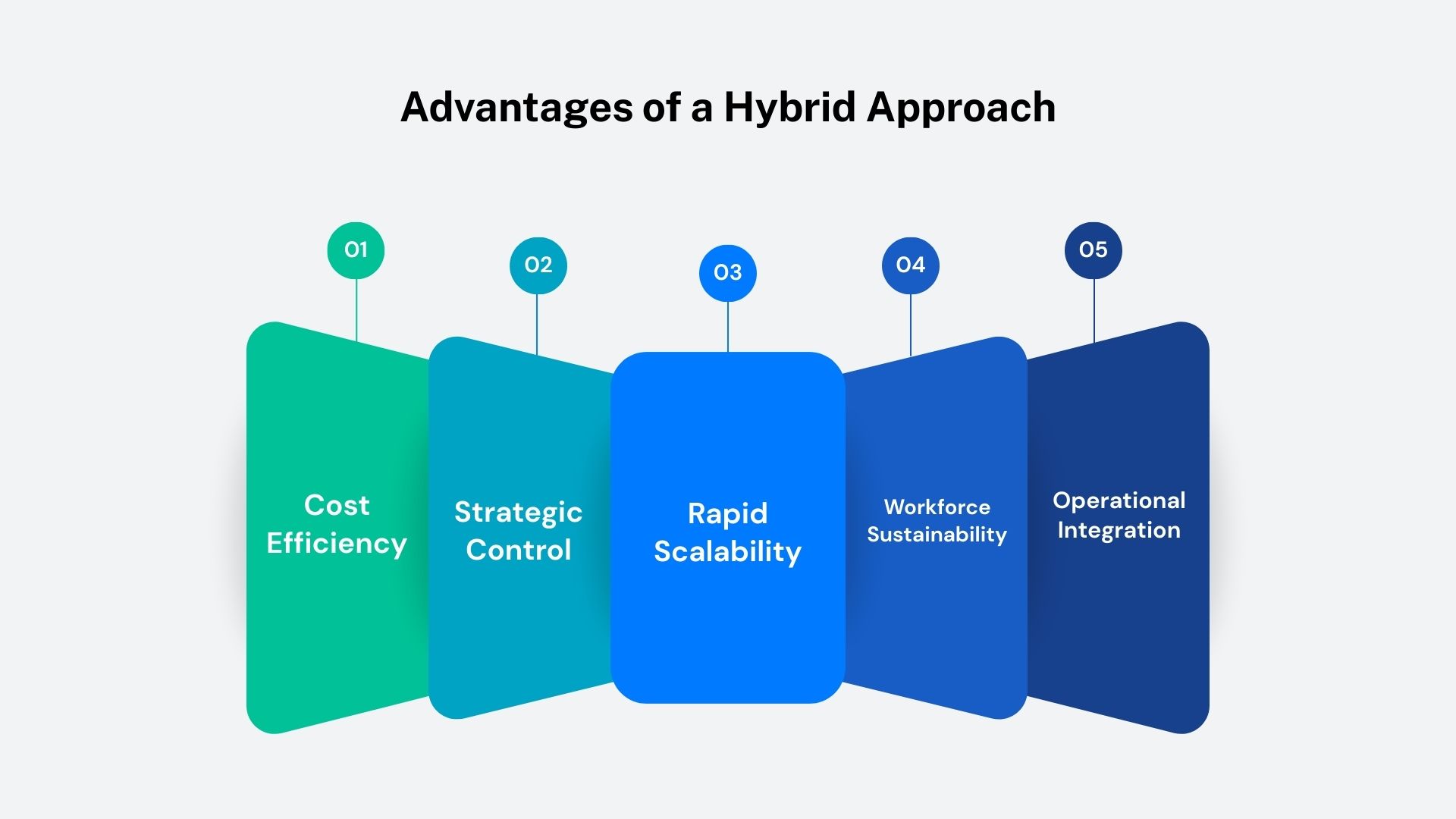
- Cost Efficiency- Reduces operational expenses by using AI-powered efficiencies.
- Strategic Control- Maintains direct oversight of sensitive, high-value functions to ensure alignment with long-term goals.
- Rapid Scalability- Enables organizations to scale quickly across different regions while strictly maintaining brand and quality standards.
- Workforce Sustainability- Supports 24/7 operations and global reach without burning out internal staff.
- Operational Integration- Promotes seamless collaboration and integration between in-house specialists and external teams.
A Proactive Strategy for the Future
This blended model is a proactive strategy that builds a flexible, future-ready workforce. By balancing automation with strategic human oversight, businesses can pivot quickly to capture new opportunities.
In this environment, cross-functional teams become the new standard. Internal experts provide the strategic guidance for outsourced partners, while outsourced teams feed AI-driven insights back into the core business to fuel continuous improvement. In the end, AI delivers the scale, and insourcing delivers the strategy.
Real-World Examples of a Blended Model
Organizations across various sectors are demonstrating that the most effective strategy isn’t choosing between in-house and external teams, but integrating both. This blended AI outsourcing and selective insourcing model provides a flexible, future-ready workforce structure.
Industry Use Cases
By balancing automation with strategic human oversight, companies can maintain control over high-value functions while scaling rapidly.
- Software as a Service (SaaS)
A tech provider outsources AI-powered customer service to a BPO in the Philippines while insourcing its core DevOps and product development. The blended approach reduces operational costs through AI-driven efficiency while allowing internal teams to focus exclusively on innovation.
- Healthcare Systems
Hospital systems utilize AI outsourcing for insurance claims and scheduling, but keep clinical decision-making and patient care management strictly in-house. Blending optimizes patient outcomes and maintains control over sensitive functions without burning out internal medical staff.
- Global E-commerce
A global retailer outsources 24/7 multilingual live chat support while insourcing customer journey design and marketing strategy. The brand achieves faster scalability across regions and promotes seamless collaboration between the strategic “brain” (in-house) and the operational “arms” (outsourced).
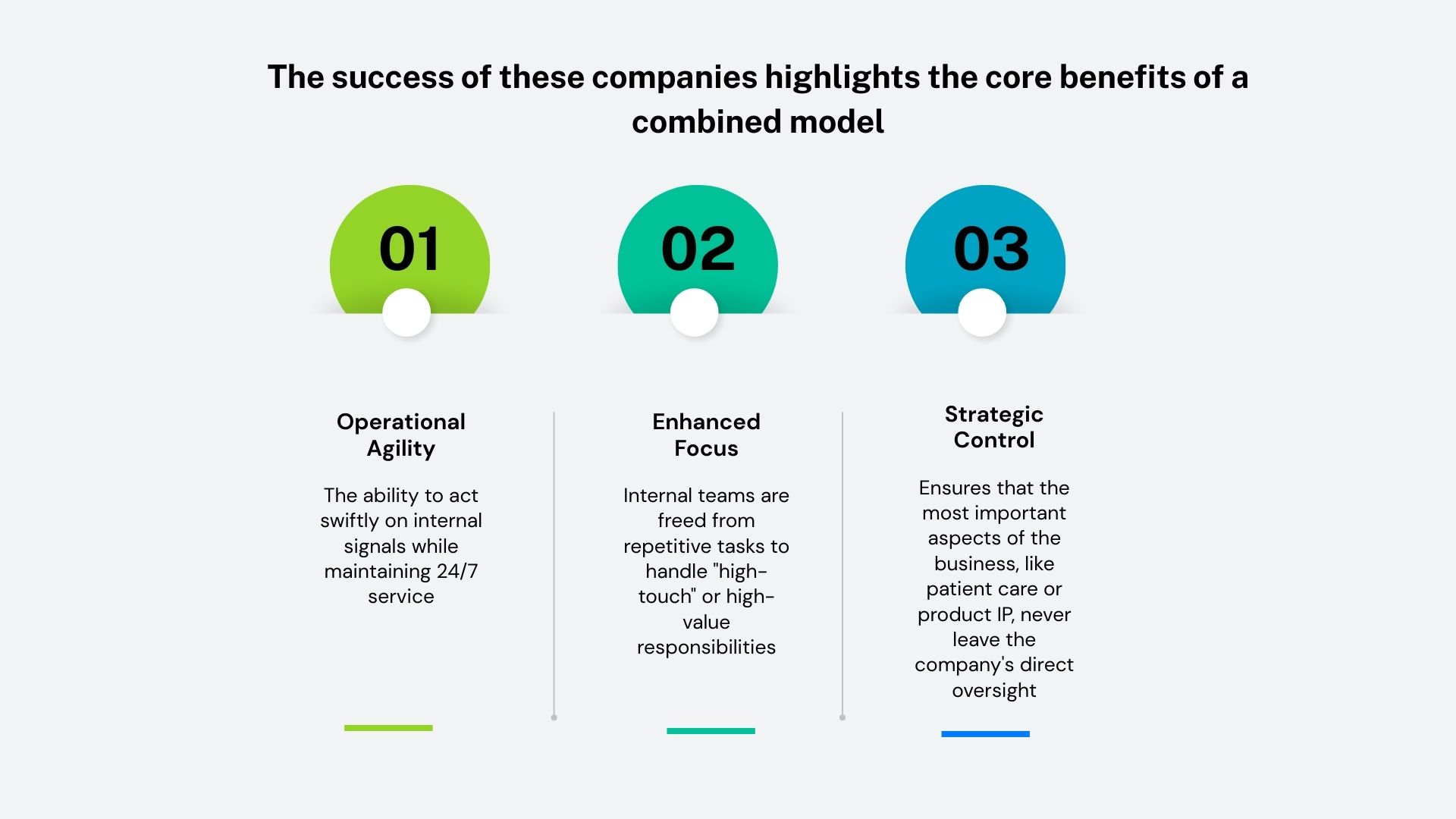
Blending AI Outsourcing with Strategic Insourcing
Building a successful operation in 2026 requires more than just hiring vendors; it demands a deliberate, hybrid approach. A well-executed strategy creates a flexible, future-ready workforce by aligning internal expertise with external technical capabilities.
Steps to Implement a Blended Model
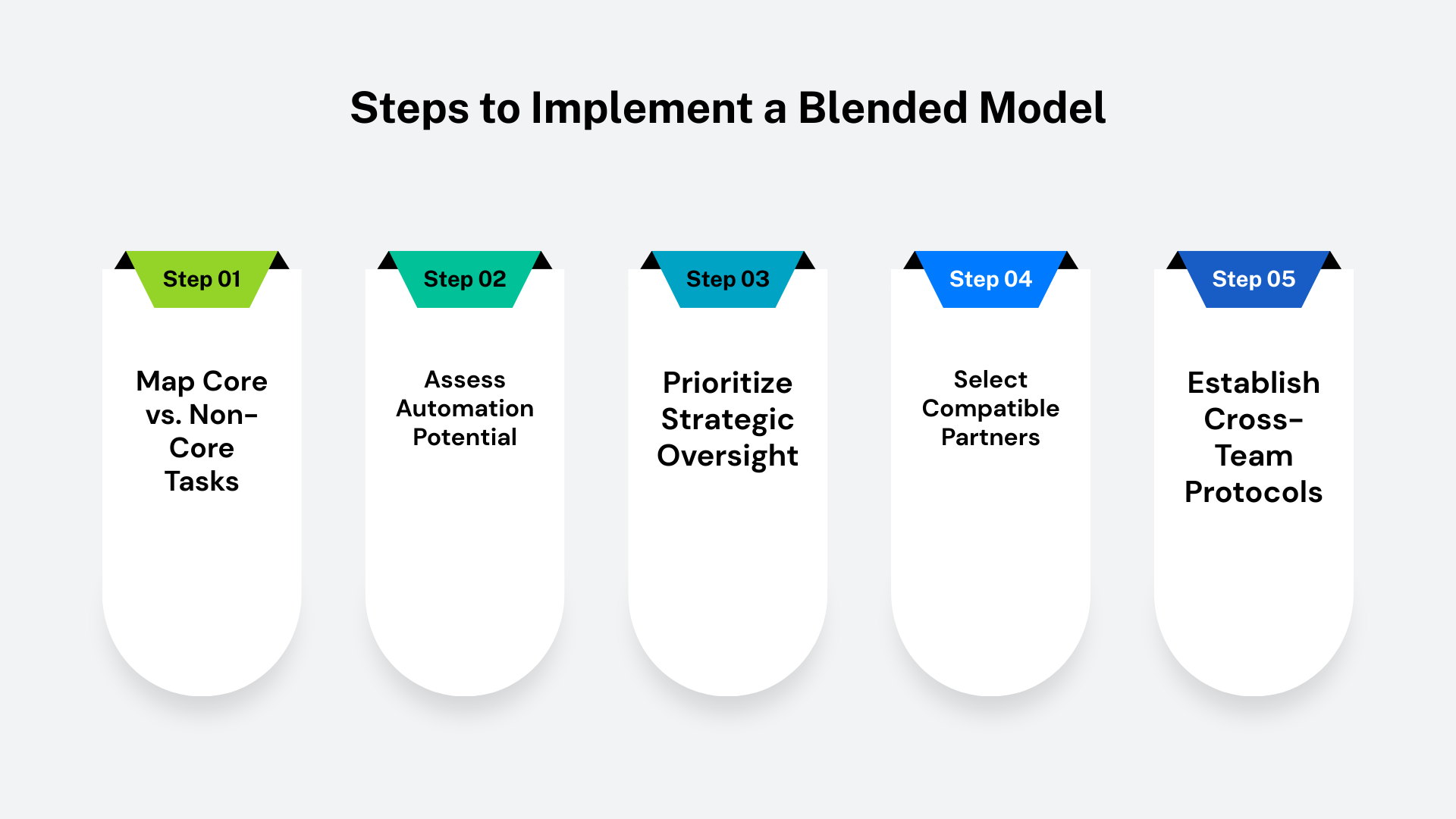
- Map Core vs. Non-Core Tasks- Determine which high-value functions require internal ownership to maintain control.
- Assess Automation Potential- Identify repetitive tasks, such as invoice processing or helpdesk triage, that are ripe for AI-driven efficiency.
- Prioritize Strategic Oversight- Ensure internal teams remain in place to manage and oversee outsourced functions for quality and alignment.
- Select Compatible Partners- When outsourcing to global hubs like India, choose vendors that prioritize tech capability alongside cultural fit and clear communication.
- Establish Cross-Team Protocols- Create shared metrics and communication tools to promote seamless collaboration between in-house and outsourced teams.
Benefits of a Blended Strategy
By intentionally balancing these two worlds, organizations can unlock several competitive advantages
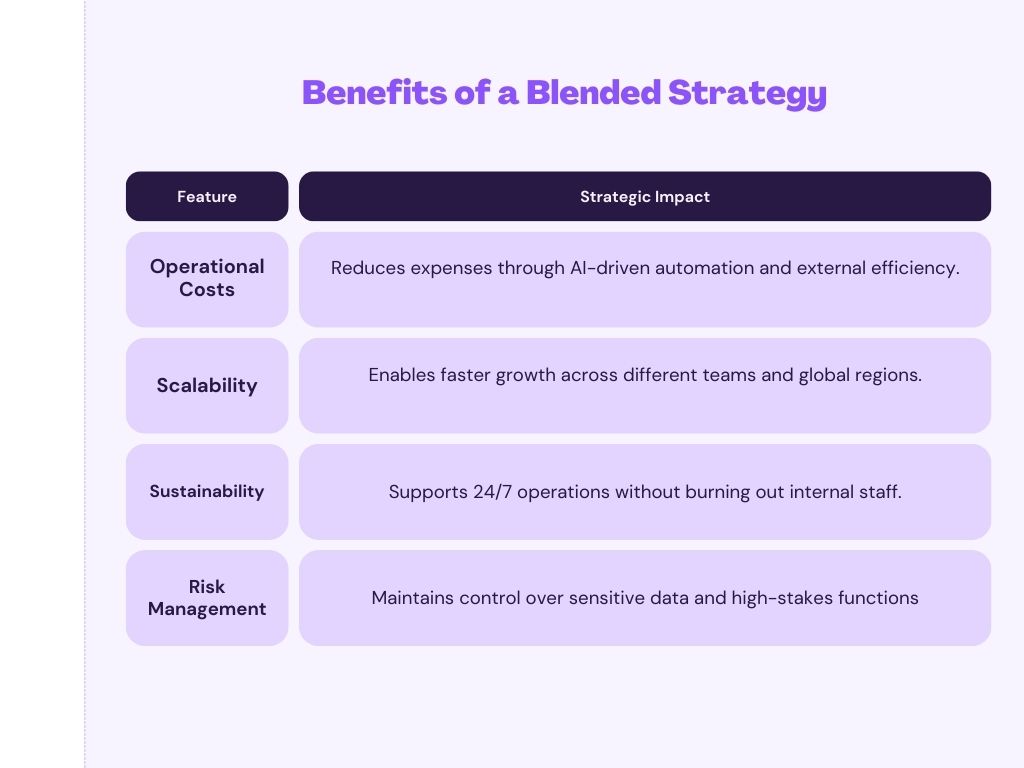
The ultimate goal is to balance automation with strategic human oversight, ensuring that while the “brawn” of a task may be outsourced, the “brain” stays close to the core.
Dealing Through the Hybrid Landscape
The adoption of a blended workforce model is not merely a temporary adjustment; it represents the definitive foundation for future-ready business operations. As AI becomes more deeply embedded in daily workflows and global talent markets shift, companies are evolving toward more intelligent, integrated operating structures.
A New Era of Outsourcing
The next generation of global operations will move beyond simple cost-cutting. Instead, the focus is shifting toward
- Performance Excellence- Prioritizing high-quality outputs over low-cost inputs.
- Actionable Insights- Using external expertise to gain a competitive data advantage.
- Continuous Innovation- Using partners to drive technological and creative breakthroughs.
Strategic Impact for Global Organizations
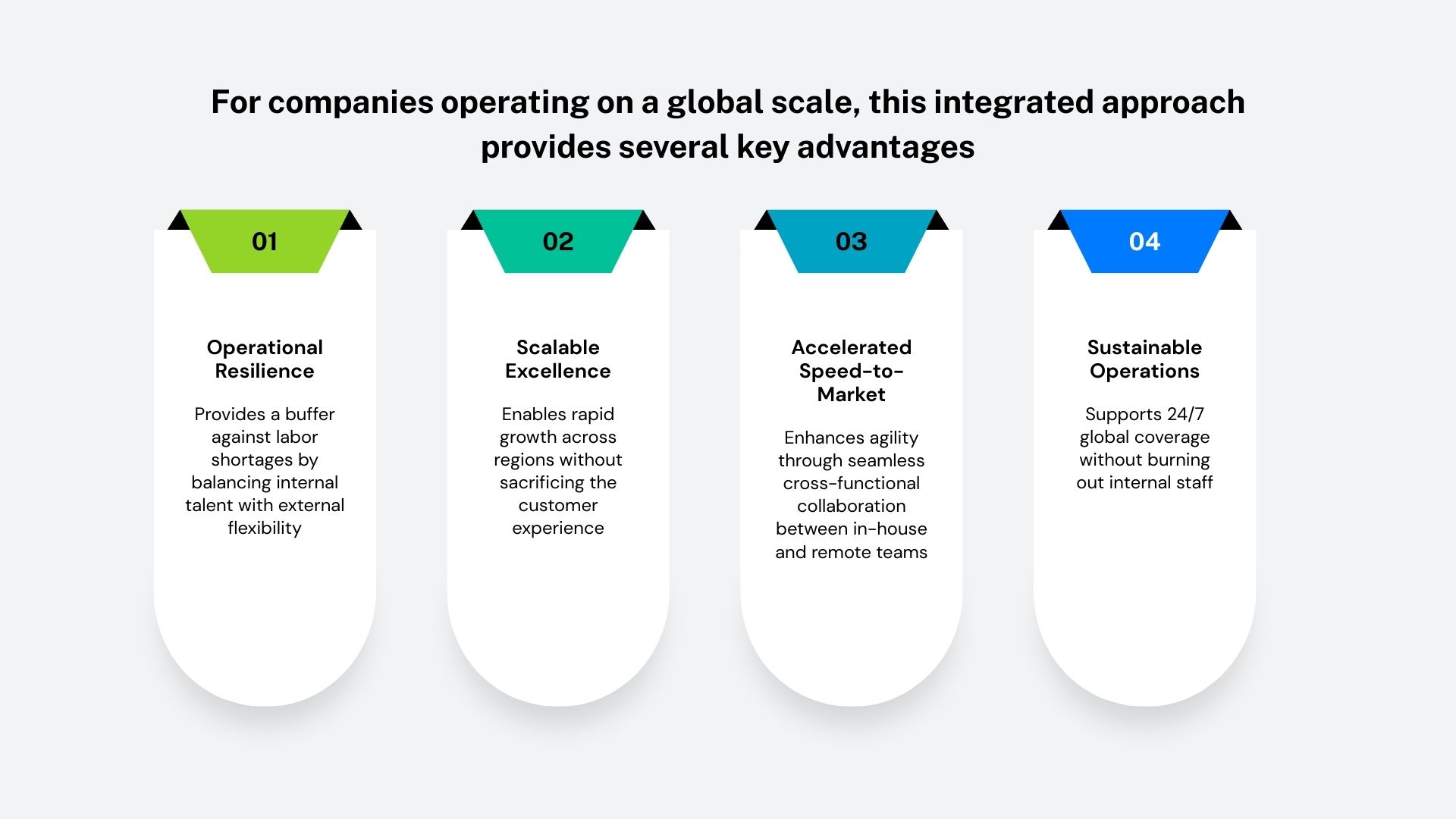
The Integrated Path Forward
The future of strategy is no longer a binary choice between outsourcing and insourcing. Success now depends on blending both, intelligently and intentionally, while working with partners who prioritize integration and quality. By balancing automation with strategic human oversight, businesses can create a workforce structure that is both flexible and future-ready.
Mastering the Blended AI Outsourcing + Selective Insourcing Model
Companies are now moving beyond outdated “either/or” thinking. The emerging standard is a hybrid strategy that blends AI-powered outsourcing with selective insourcing to maximize efficiency while preserving strategic control.
Combining these two forces allows businesses to redefine core functions, improve responsiveness, and unlock new levels of innovation.
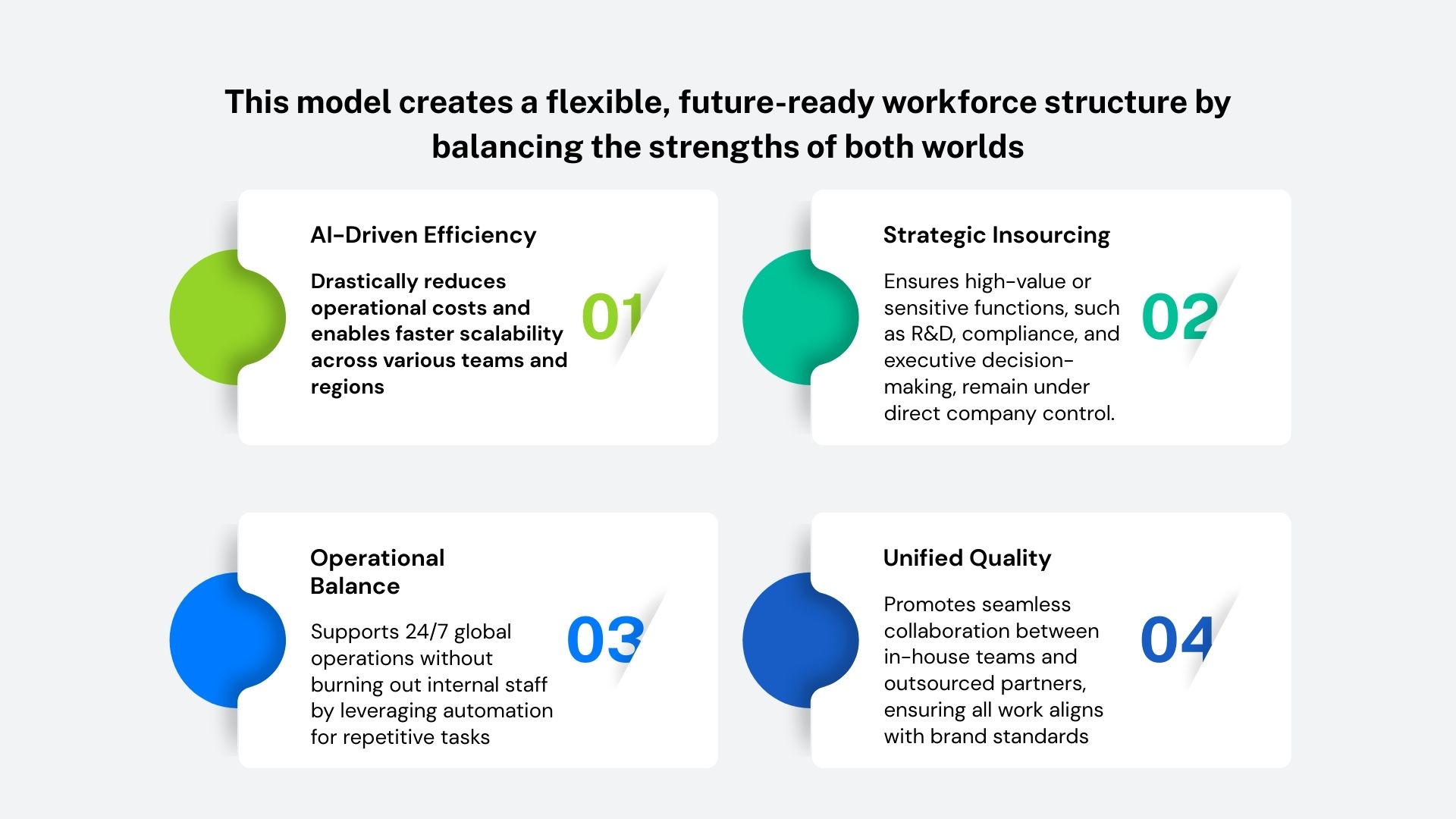
Importance Of Strategic Human Oversight
While AI provides the power to scale, internal teams provide the cultural consistency and deep institutional knowledge necessary to act on internal signals. These teams are essential for managing and overseeing outsourced functions to ensure quality and long-term alignment with business goals.
Explore Your Options with PCPL
Ready to design a hybrid operating model that works for your unique needs? PCPL specializes in helping organizations deal through this transition. Whether you are looking to scale with AI-driven efficiency or solidify your insourcing strategy, we provide the expertise to support you every step of the way.
References
https://superstaff.com/blog/ai-outsourcing-with-selective-insourcing/
https://www.version1.com/blog/the-strategic-value-of-smart-outsourcing/